About BiCS 2026

BiCS 2026: Pioneering Global Marine Advocacy and Innovation

The Blue International Ocean Conference (BiCS 2026) is conceptualised and managed by EventsKart (www.eventskartedu.org) , a premier global educational consultancy firm. We bridge environmental advocacy, professional excellence, and international exploration through transformative student engagement, global conferences, and tailored sustainable development initiatives for the education and eco-tourism sectors.

Our Strategic Partnership

BiCS 2026 is delivered in close collaboration with Global Oceanic Adventures & Environmental Conservation (GOAEC) Foundation (www.goaec.org), a premier non-profit organization and Oceanite dedicated to marine preservation and community empowerment.

GOAEC Foundation's Core Pillars

  • Artificial Reef Management: Comprehensive pre- and post-deployment services, environmental monitoring, and long-term reef maintenance.
  • Community Livelihoods: Developing sustainable economic and livelihood programs for local fishing communities.
  • Youth Athletic Training: Professional water sports coaching in scuba diving and kayaking, preparing youth for championship competitions.
  • Marine Research & Exploration: Advanced shipwreck exploration, coral and flora/fauna research, and comprehensive underwater surveys.
  • Academic Empowerment: Supporting global marine research institutions and educating students through specialized workshops and hands-on field training.
Vision & Mission
Vision

To forge a multi-generational, cross-sector ecosystem where digital intelligence powers sustainable maritime economies, pioneering a resilient path forward for global oceans and coastal communities.

Mission

The Blue Intelligence Climate Summit (BiCS) 2026 accelerates ocean climate action by bridging the gap between advanced technology and marine conservation, aligning youthful innovation with industrial and governance frameworks. We unite students, research scientists, blue economists, maritime conservation organizations, ship building industries, AI tech corporates, and local policy leaders to co-create scalable AI solutions, decarbonize global shipping, advance sustainable eco-tourism, and secure eco-conscious economic growth.

Core Objectives of the Summit

The Blue Intelligence Climate Summit 2026 is designed to achieve four core objectives, bridging the gap between cutting-edge technology and immediate marine conservation needs.

1
Accelerate Maritime Decarbonisation

Enable real-time route optimization and smart port management to cut global commercial vessel fuel consumption and maritime emissions.

2
Democratize Marine Data Science

Empower student innovators and independent research scientists to turn theoretical code into practical, deployable marine protection tools.

3
Standardize Data-Driven Coastal Governance

Create municipal policies that actively prevent coastal erosion and illegal fishing while maintaining sustainable hospitality revenue.

4
Cultivate Next-Gen Climate Tech Talent

Build a permanent, cross-sector recruitment pipeline that places skilled data scientists directly into the blue economy.

Core Themes

Blue Economy & Ocean Governance

AI, Satellites & Digital Climate Intelligence

Marine Biodiversity & Coastal Conservation

Renewable Energy & Green Technology

Fisheries, Aquaculture & Coastal Livelihoods

ESG, Carbon Neutrality & Sustainable Finance

Target Goals of SDGs

The Blue Intelligence Climate Summit 2026 is anchored by SDG 14 (Life Below Water), serving as the central framework that unites all other Sustainable Development Goals. Because marine ecosystems regulate the global climate, protecting the ocean is impossible without simultaneously driving clean energy, industrial innovation, and global partnerships.

Target Goal: SDG 14 (Life Below Water)

SDG 14 is the baseline requirement for all four tracks of the summit. Every technology pitched — whether a satellite mapping tool or a wave energy converter — is evaluated on its capacity to prevent marine pollution, end overfishing, and sustainably manage coastal ecosystems.
SDG 4
Quality Education

Summit Integration: The dedicated student and researcher presentation tracks.

Academic research cannot remain isolated in labs. The summit advances SDG 4 by providing early-career scientists with the industrial knowledge and technical skills required to build scalable marine preservation tools.

SDG 7
Affordable and Clean Energy

Summit Integration: The Offshore Renewable Energy Expansion track.

Transitioning away from fossil fuels requires tapping into ocean power. Deepwater offshore wind, wave, and ocean thermal energy conversion (OTEC) provide clean electricity grids without depleting terrestrial land resources.

SDG 9
Industry, Innovation, and Infrastructure

Summit Integration: The AI, Data & Ocean Intelligence track.

Traditional marine conservation lacks processing speed. Integrating advanced infrastructure — such as AI-driven digital twins, satellite remote sensing, and real-time data buoy arrays — modernizes ocean monitoring and makes industrial maritime operations resilient.

SDG 12
Responsible Consumption and Production

Summit Integration: The Decarbonization & Circular Economy track.

Ocean pollution is a symptom of linear waste patterns on land. The summit highlights closed-loop supply chains, green aquaculture practices, and upcycling marine waste into new bio-materials to decouple maritime economic growth from environmental degradation.

SDG 13
Climate Action

Summit Integration: The Resilience & Just Transition track.

The ocean absorbs over 90% of excess global heat and 25% of carbon emissions. Summit solutions targeting mangrove, seagrass, and coral reef restoration act as high-efficiency, nature-based carbon sinks that protect coastal areas from rising sea levels.

SDG 17
Partnerships for the Goals

Summit Integration: The cross-collaboration between global UN delegations, universities, and private industries.

No single country or corporation owns the international high seas. The summit facilitates cross-border technology transfer, open-source ocean data sharing, and international funding pipelines to ensure Small Island Developing States (SIDS) are not left behind.

Benefits

Researchers

  • Present Abstract Papers
  • Opportunity for Scopus-indexed publication support
  • International networking and collaborations
  • Research awards and recognition
  • Exposure to industry and funding opportunities
  • Participation certificate and summit proceedings

Students

  • Innovation and startup exposure
  • AI & Climate Hackathon participation
  • Interaction with global researchers and mentors
  • Awards, internships, and collaboration opportunities
  • Youth leadership engagement
  • Global networking opportunities

Who Can Participate ?

  • Researchers
  • Students
  • Policy Makers
  • ESG Professionals
  • Industrialists
  • NGOs
  • Recyclers
  • Startups
  • Exhibitors
Summit Highlights

25th & 26th October 2026

Inaugural Ceremony
Ministerial Dialogues
Technical Panels
Keynote Sessions
Poster & Paper Presentations
Hackathon Innovations
Jury Evaluations
Valedictory Sessions
Awards & Recognitions
Beach Clean-up Activity
Visakhapatnam Blue Intelligence Declaration 2026
Note: City tour will be organized as per the request of all the participants (Should be informed a week in advance).
Expected Participation
1400+
Delegates
600+
Researchers / Academicians / Policy Makers & Recyclers
500+
Students: UG, PG & University
100+
Industry Leaders
50+
Startups
26+
Countries
40+
Sponsors & Partners
20+
Govt. Representatives
Awards & Recognitions

Surprise Cash Awards / Cash Vouchers

Research - Awards
  • Blue Economy Researcher Award 2026 (Cash Award)
  • Ocean Conservation Excellence Award
  • Outstanding Academic Contribution Award
Student - Awards
  • Blue Intelligence Leadership Award (Cash Award)
  • Climate Innovation Award
  • Young Researcher Award
Startup Recognition
  • Best Sustainable Startup Award
Host City & Venue
Why Visakhapatnam?

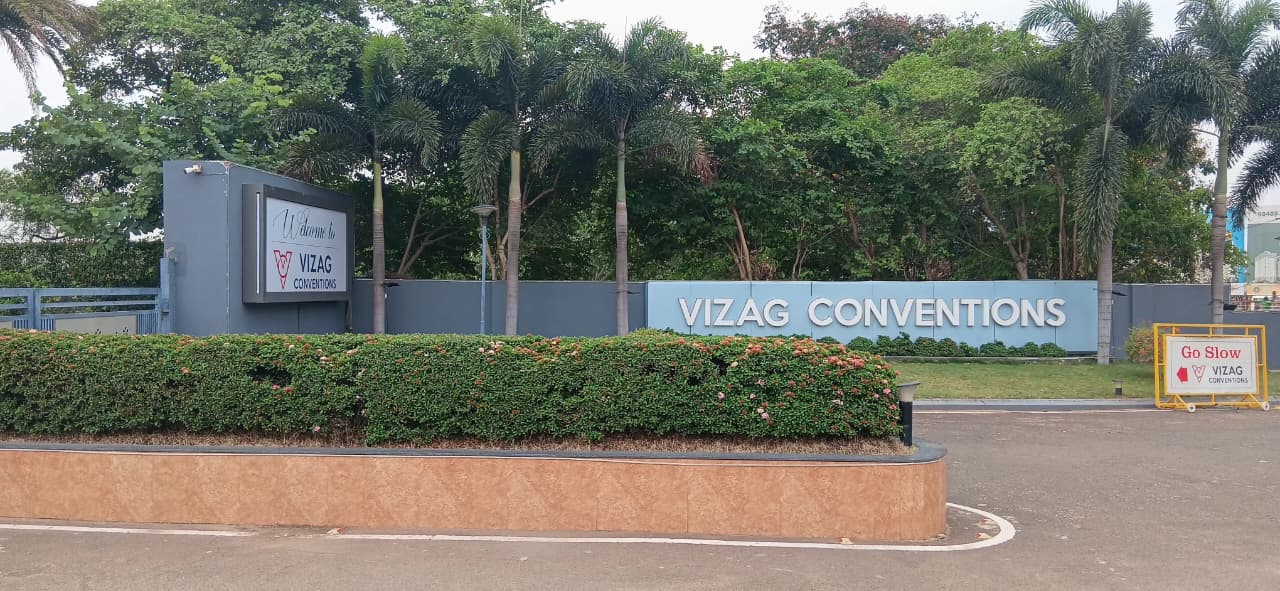
Visakhapatnam is India's emerging coastal innovation hub, strategically positioned on the Bay of Bengal, making it an ideal venue for a summit centered on ocean sustainability and climate resilience.

The selected venue offers large-scale convention capacity and beachfront access suitable for international conferences.

Why at Radisson Blue?

Radisson Blue and the broader Radisson Hotel Group are highly recognized for their commitment to sustainable tourism and eco-friendly hospitality.

The brand has championed environmental initiatives for decades and focuses heavily on reducing carbon, energy, and water consumption.

Our Associates
Goa Ecology
GOAEC Foundation
ICAR-CMFRI
ICAR-CMFRI
Marine Biological Association of India
MBAI
RFI
RFI
GPF
GPF India
Suraksha
Suraksha
Goa Ecology
GOAEC Foundation
ICAR-CMFRI
ICAR-CMFRI
Marine Biological Association of India
MBAI
RFI
RFI
GPF
GPF India
Suraksha
Suraksha